

Shiver Showcase - Ernest Shackleton
Jeffrey Redmon | Aug 24 2026 18:20
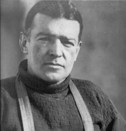
The Leader Who Failed His Way Into History
Ernest Shackleton is one of my heroes. Not because he succeeded. Because he didn't.
His most famous expedition never accomplished its objective. His ship was crushed by Antarctic ice. His crew was stranded for nearly two years. By every conventional measure, the expedition was a spectacular failure.
Yet Shackleton brought all 27 of his men home alive.
More than a century later, we remember him less for where he explored than for how he led when everything went wrong.
They Called Him "The Boss"
Shackleton understood people.
He knew that keeping 28 men alive wasn't simply a problem of food, shelter, and navigation. It was a problem of human nature.
He watched morale constantly. He created routines when there was no routine. He used humor and celebrations to break the monotony. He gave people responsibility. He knew when someone needed encouragement and when someone needed to be kept close because a negative attitude could infect the entire crew.
His men trusted him.
That trust would eventually be tested almost beyond comprehension.
After months drifting on the ice and then reaching the desolate Elephant Island, Shackleton and five men climbed into the James Caird , a 22-foot lifeboat, and sailed roughly 800 miles across one of the most dangerous stretches of ocean on earth.
They reached South Georgia Island, but on the wrong side.
Shackleton and two others then crossed the mountainous, largely unexplored interior of the island to reach a whaling station and begin the rescue effort.
Months after leaving his men on Elephant Island, Shackleton returned.
Every one of them was still alive.
An Unusual Definition of Greatness
Shackleton never achieved what he originally set out to accomplish.
That may be exactly why his story matters.
Leadership is easy to admire when someone wins the race, builds the company, reaches the summit, or accomplishes the impossible goal.
Shackleton gives us a different kind of hero.
His greatness emerged after achieving the goal was no longer possible.
He adapted. He protected his people. He accepted enormous personal risk. He kept moving. And he gave his team something perhaps even more important than a brilliant plan.
He gave them reason to believe in their leader.
Shackleton's expedition failed.
Shackleton the leader did not.
That is why, more than a century later, we're still talking about the Boss.